

The Santa Marta Conference Analysis from an African Perspective
Within the scope of this analysis:
Africa holds many of the minerals that the energy transition depends on. It also has huge renewable energy potential and growing political leverage.
The transition is no longer only about cutting emissions. It is also about where economic value sits and who controls the industries being built around clean energy.
That leverage will remain fragile without continental coordination. As new fossil fuel governance systems take shape, the question remains whether Africa will present a collective strategy or continue carrying the cost of a system shaped elsewhere.
What exactly was the Santa Marta Conference, and why did it happen now?
This inaugural Conference on Transitioning Away from Fossil Fuels (“TAFF”) was held in the port city of Santa Marta from April 24 to 29, 2026, and was co-hosted by the governments of Colombia and the Netherlands. It brought together close to 60 countries for a high-level discussion on how to phase out coal, oil and gas. The meeting followed COP30’s failure to include any reference to fossil fuels in the final decision text, and the Brazilian COP Presidency’s decision to create a parallel voluntary roadmap on TAFF during the course of this year.
The process emerged from frustration with the limits of the UNFCCC system. Organisers wanted a forum that could move faster. The idea was that a smaller coalition could move without the resistance that often stalls formal negotiations. The Iranian energy crisis and rising oil prices also pushed energy security back into focus.
“The urgency is multiplied. What’s happening has worsened the fossil fuel crisis we are already in.” - Former Irish President and former Chair of the Elders, Mary Robinson.
The Conference Attendance, or lack thereof
The event was by invitation only. About 60 countries were present; this is a fifth of the global fossil fuel supply. Several major polluters were absent; the UAE, Qatar, Russia, Saudi Arabia, India, the USA, and China were not in attendance, with many of them not invited. Director of Colombia’s Environmental Agency, Irene Vélez Torres, defended the decision not to invite China, Russia and the US, arguing that they had not shown a willingness to engage in the process. In Africa, several major fossil fuel producers were absent, notably Algeria, Mozambique and South Africa. However, questions remain over whether some of these countries were formally invited. To date, no country has come forward to confirm this.
From Africa, Cameroon, Ghana, Kenya, Malawi, Nigeria, Senegal, Tanzania and Uganda were present. Their presence mattered politically. It showed that some producer countries were willing to engage in the discussion directly, showcasing the willingness from exporter and emitter countries to chart a path forward, which an importer-only driven forum would lack.
What were the key outcomes?
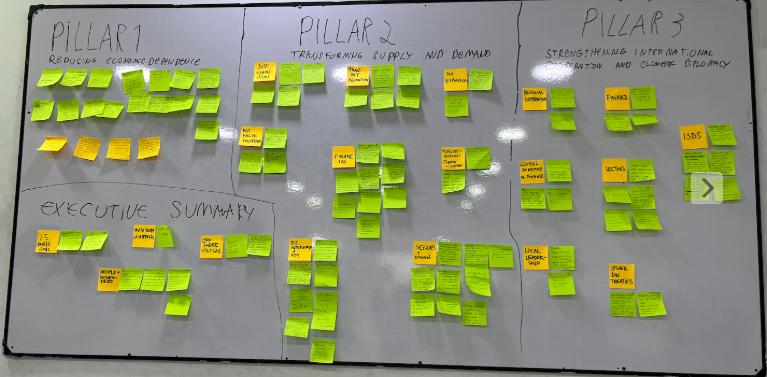
The TAFF produced a call for national roadmaps that would serve voluntary plans setting out how individual countries will end production and the use of fossil fuels. Unlike NDCs under the Paris Agreement, these roadmaps would also address production and exports. A roadmap would include export and production trajectories, filling a significant governance gap. Colombia published a draft roadmap, and following suit, France released one during the conference, making it the first developed country to release one.
Countries also agreed to work on the decarbonisation of imports and exports, to create a fossil-fuel-free trade system. Another workstream focuses on fossil fuel subsidies, debt vulnerabilities, and broader financial reforms needed to support transition pathways.
Some participants had hoped the meeting would generate stronger backing for the Fossil Fuel Treaty Initiative, a proposed legally binding agreement intended to go beyond the Paris framework. In the end, however, the conference positioned itself as complementary to the Brazilian TAFF Roadmap and broader UNFCCC processes, without formally endorsing the treaty.
A dedicated scientific panel was launched at the meeting to provide the evidence base that governments need to chart their paths. It has been hoped that this new panel would overcome some of the frustrations with the IPCC high-level meetings, which have been subject to interference and influence from fossil fuel-producing states.
Finally, and perhaps the most consequential, Tuvalu and Ireland confirmed that they will co-host the Second Conference in the Pacific in 2027, transforming Santa Marta from a one-off event into the opening of an ongoing international process.
What were the critiques?
The voluntary roadmaps also face a significant accountability problem. There are no minimum standards, timelines, or independent review mechanisms. This was named during the conference; however, there have been no conversations about its resolution. It is also unclear how many African states, which already face financial and institutional constraints in updating NDCs, will manage an additional reporting framework.
With financing, the conference called for a simultaneous development of phase-out roadmaps with the availability of implementation finance, to make the roadmaps viable. It would be difficult for these to work in tandem unless the finance proposals become operational instruments for countries to then commit to winding down their production.
The absence of major emitters raises an unspoken question around leverage. The Santa Marta process is deliberately designed as a pressure mechanism on the USA, China, India and Gulf States. Although the coalition signals political momentum, voluntary roadmaps cannot substitute for binding commitments from the major producers and consumers that still shape global fossil fuel demand.
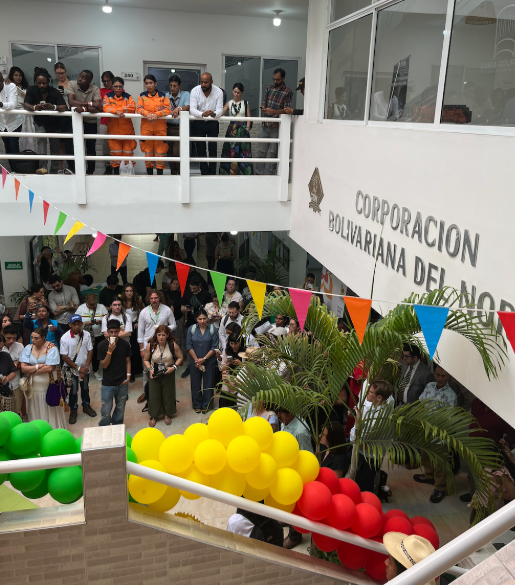
Enzi Ijayo Africa Initiative at the People’s Assembly.
How did African civil society engage the conference, and what did they bring to the table?
As a think-and-do tank in the People’s Assembly under the NGO segment, contributing to the virtual dialogues ahead of the conference. The interventions were centred around three interlocking arguments that speak directly to the African structural condition:
Fiscal reform: We argued that the transition cannot be treated as a problem of political will in Africa, when it is fundamentally a structural one, based on fossil revenues that underwrite social services, debt servicing and social protection across the continent, and without credible fiscal alternatives in place first, transition commitments will remain hollow. Episodes of social unrest following abrupt subsidy withdrawal in Burundi, Libya, and Chad served as evidence of this structural dependency. This problem is one of sequencing.
We also called for the redirection of fossil fuel subsidies into African renewable energy deployment, with explicit protections for vulnerable populations during the adjustment period.Climate finance: We pushed back against the continued dominance of project-based, debt-heavy financing approaches, calling instead for finance that supports systemic economic restructuring and green industrialisation, with renewable energy linked to productive growth rather than treating decarbonisation as an end in itself.
Africa attracts 2% of global renewable energy investment, despite being resource-rich in wind, hydro, and geothermal energy. The disparity reflects structural issues in sovereign risk ratings, freight costs and capital pricing that continue to disadvantage African markets.Governance and the definition of just transition: We argue that existing just transition frameworks remain too narrow and underdeveloped. COP28’s “just, orderly and equitable” language was a landmark in naming the concept. The Just Transition Work Programme that followed has no binding finance commitments, no critical minerals governance provisions, and developed countries actively blocked actionable outcomes at the 2025 Bonn intersessionals.
We proposed a broader definition of just transition, grounded in six connected dimensions: distributive justice (grant-based finance, not loans), procedural justice (FPIC and community decision-making), restorative justice (loss and damage reparations), recognitional justice (meaningful inclusion of women, youth, and Indigenous peoples), labour rights (living wages and green jobs), and developmental sovereignty, meaning local value addition and technology transfer in critical minerals.
The Belem Package from COP30: We assessed that the establishment of a Just Transition Mechanism and the formal recognition of Africa's special circumstances were genuine advances. However, deferring adaptation finance, leaving the fossil fuel phaseout roadmap outside binding UNFCCC text, and omitting critical minerals governance entirely meant the architecture fell short of what the moment requires. Also, the African bloc's refusal to endorse a phaseout roadmap without a structurally equivalent, binding Adaptation Finance Roadmap is a principled demand for symmetry in how the climate regime treats emissions targets and African development needs alike.
The Santa Marta Conference, from an African perspective
The conference's core financing asks (lower cost of capital, expanded concessional lending, debt relief, a Just Transition Fund) align closely with demands long made by African governments and civil society. The explicit naming of the debt trap and fiscal trap as structural barriers represents a meaningful acknowledgement of the unequal burden that falling fossil revenues would place on producer-dependent economies. Kenya's delegation pointed out that even a renewable energy leader with one of the cleanest grids on the continent still faces fossil fuel lock-in within its transport sector, precisely because the international governance framework has not kept pace with domestic ambition.
Ghana's intervention was arguably the conference’s most significant African contribution. Technical Director Cedric Dzelu's closing statement signalled that Ghana is more supportive of participating in the proposed Fossil Fuel Treaty, and that national stakeholder consultations are underway across every sector of the economy. Ghana also intends to be an "African mobiliser" starting in West Africa and expanding across the continent. That posture, if it translates into the formal Parliamentary process Dzelu described, represents a meaningful shift and one worth watching closely.
But the unease is equally real, and it runs deeper than procedural concern. Several major African fossil fuel producers were absent. Their non-attendance is precisely in the countries where the economic dependence argument is sharpest and where transition finance will need to be most substantial. A process that proceeds without them risks designing a transition architecture that does not fit the continent's actual political economy.
There is also a concern about what "green industrialisation" means in practice if the architecture is not suitable. Africa holds an extraordinary share of the critical minerals needed for the global energy transition (lithium, cobalt, manganese, graphite), yet the historical pattern has been extraction for export rather than value-added processing and manufacturing at home. Santa Marta's documents speak compellingly about a just transition and developmental sovereignty.
However, the critical minerals governance gap Enzi Ijayo flagged is real, with currently no international framework ensuring that the transition Africa facilitates through its mineral wealth translates into African industrial development rather than a green replication of the same extractive model that has constrained the continent's economic sovereignty for generations.
What does Africa's energy future actually look like if the right choices are made from here?
Africa stands at a genuinely unusual position in the global energy transition. It is simultaneously the region most acutely exposed to climate impacts, the region holding much of the mineral wealth on which the transition depends, a region with enormous untapped renewable energy potential, and the region where per-capita energy access remains most inadequate. That combination of vulnerability and leverage is a negotiating position, if African governments and civil society choose to use it as one. Broad African support for the TAFF process would also shift its political weight significantly within and beyond UNFCCC negotiations.
The global transition requires African minerals, African land, African renewable energy and African political consent. That gives the continent real leverage to negotiate the terms of its participation and shape a transition architecture where African industrial development is a built-in outcome rather than an afterthought. Green industrialisation that adds value to critical minerals domestically, that builds regional clean energy markets through platforms like EAPP, that links renewable energy deployment to productive use and manufacturing rather than treating electrification as an end in itself.
The risk is that Africa enters the Tuvalu TFFA meeting in 2027 without a coordinated continental position, allows any Fossil Fuel Treaty architecture to be designed around the priorities of island states and European co-hosts, and endorses phase-out timelines before financing mechanisms are operational. That sequence would replicate the pattern that we have described as structurally unjust, asking the continent to absorb transition costs before the instruments that make transition viable are in place.
Subscribe to our newsletter below and stay informed on the latest updates, engagements, and news!
