

Africa’s double dollar drain: How debt service and fuel imports constrain industrialisation
How debt service and fuel imports constrain industrialisation
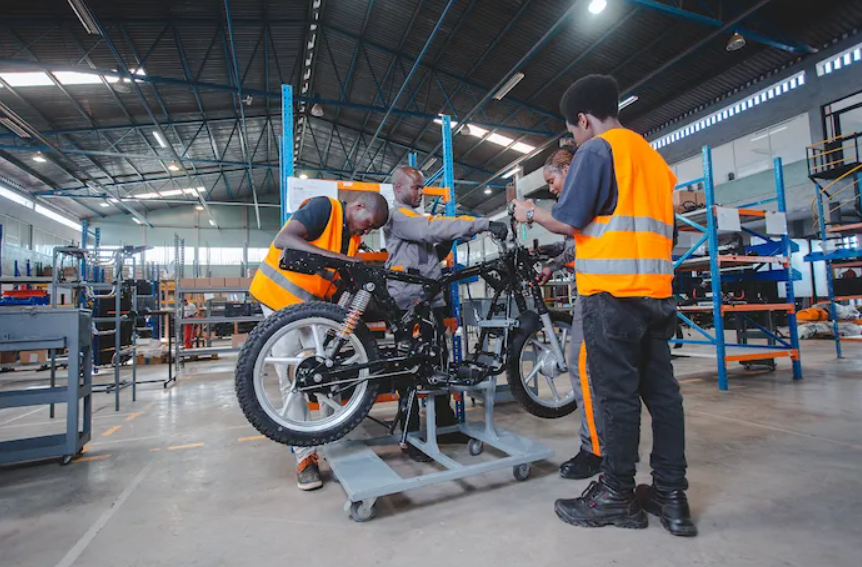
Kenya's Electric Mobility Policy Faces Its First Fiscal Test
Only months after launching its National Electric Mobility Policy, Kenya nearly removed one of the fiscal incentives underpinning it. This article explores how a technical VAT proposal in the Finance Bill 2026 exposed the tension between revenue generation and green industrial policy and why policy certainty matters for the country's electric mobility transition.
Terms of Reference: Senior Programme Officer: Research and Advocacy
ToR: Senior Programme Officer: Research and Advocacy
Enzi Ijayo Africa Initiative
The Santa Marta Conference Analysis from an African Perspective
The Santa Marta Conference marked the beginning of a new international process on transitioning away from fossil fuels. From an African perspective, the meeting exposed both opportunity and risk
Call for expression of interest for provision of external audit services
Call for expression of interest (eoi) for provision of external audit services

Cherop Soy selected for Future Energy Leaders programme
Cherop Soy selected as a member for the World Energy Council Future Energy Leaders programme

Africa’s opportunity to close the technology gap and industrialise
As global trade rules evolve, Africa faces a critical opportunity to close the technology gap that limits its green industrialisation. This op-ed examines how reforms to intellectual property frameworks, stronger regional integration and investment in skills can help the continent move beyond raw material exports and build competitive clean-energy value chains.
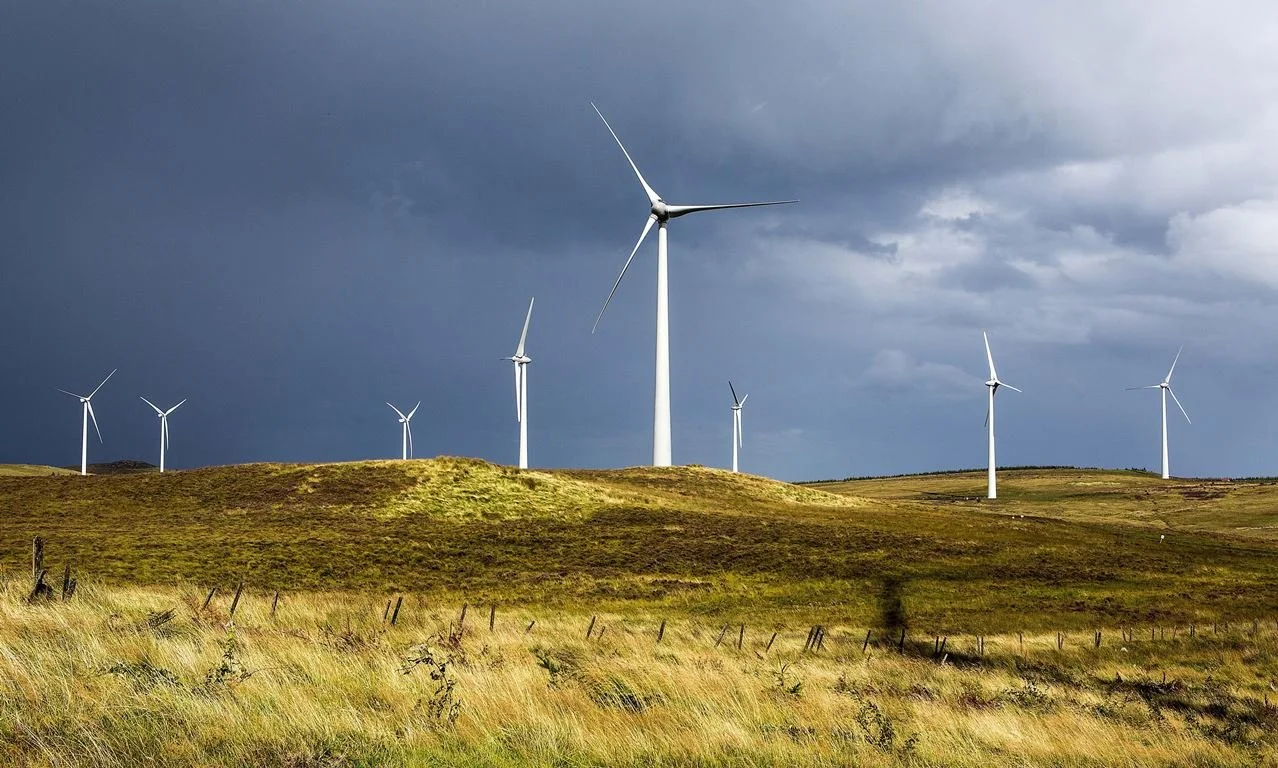
PART TWO Case Study: Kinangop Wind Park (KWP) Project: A Cautionary Tale of Government Guarantees
The collapse of the Kinangop Wind Park was not simply a project failure, it was a warning about the hidden costs of poorly structured government guarantees. What began as a flagship renewable energy investment instead exposed how contingent liabilities, weak project preparation and misallocated risk can undermine both investor confidence and public finances. As Kenya looks to scale renewable energy under tight fiscal constraints, the lessons from Kinangop are impossible to ignore.
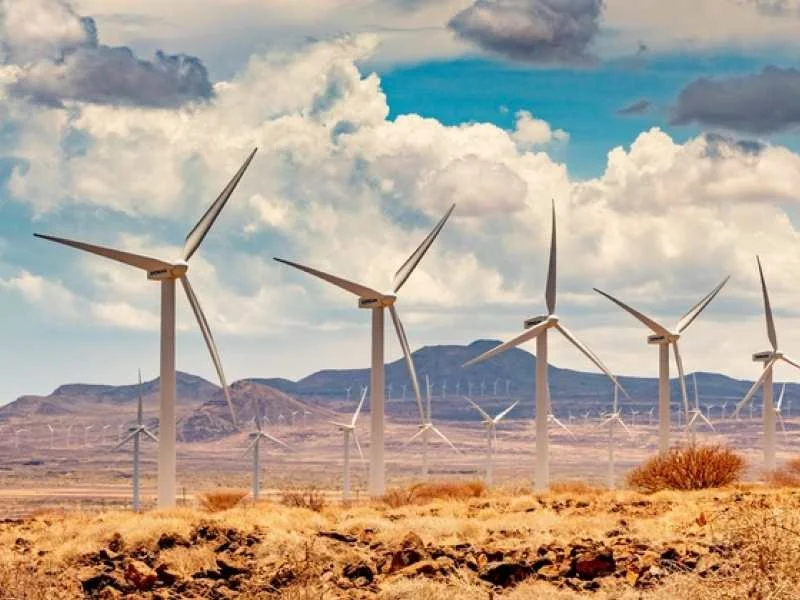
PART ONE: Rethinking Government Guarantees for Renewable Energy in Kenya
Kenya’s renewable energy ambitions depend on mobilising private capital at scale, yet rising public debt has made reliance on broad government guarantees increasingly risky. As electricity demand grows and fiscal space tightens, the country must rethink how political and offtake risks are allocated. This piece explores why sovereign guarantees create hidden liabilities and how market-based de-risking tools can unlock investment while safeguarding public finances.
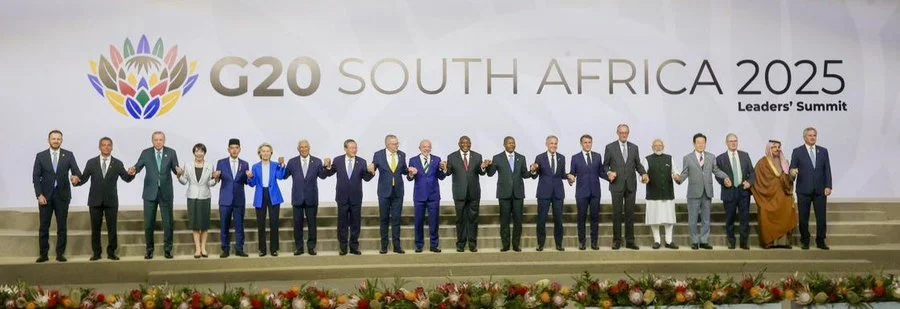
Implementation Levers and Geopolitical Stakes from COP30 & G20
COP30 and the G20 revealed a decisive shift in global climate governance: less law, more implementation. As geopolitical dynamics reshape climate action, Africa sits at a critical crossroads. This analysis highlights the opportunities and risks emerging from Belém and Johannesburg, and what they mean for Africa’s transition.

The Geopolitics of Critical Minerals in Africa
Redefining the Continent’s Role in the E-mobility Value Chain.

Mitigation Ambition in African NDCs ahead of COP30
Assessing progress, challenges, and opportunities for climate action across the continent.
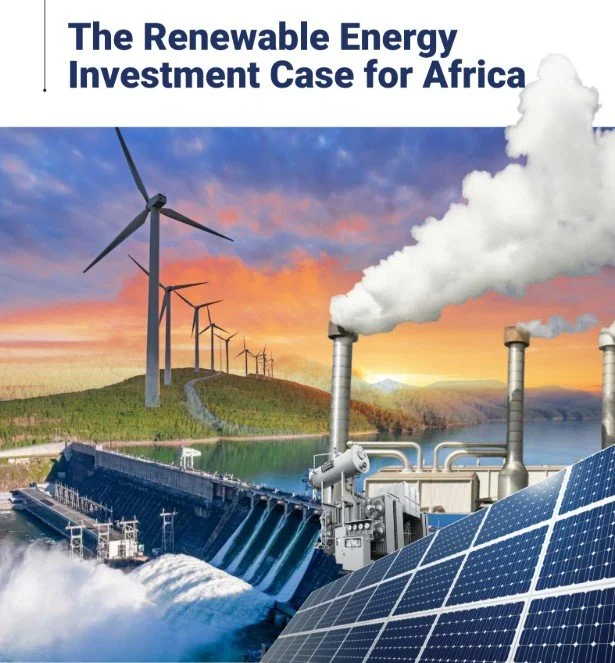
The Renewable Energy Investment Case for Africa
Africa possesses one of the world’s greatest renewable energy potentials, but it continues to attract only a small fraction of global clean energy investment. The new report, The Renewable Energy Investment Case for Africa, underscores the urgency of closing this gap. Africa must expand its renewable energy capacity by 23% annually to meet its transition objectives and deliver on commitments such as the Nairobi Declaration. The report provides evidence-based insights and financing pathways to guide policymakers and investing partners in unlocking the continent’s clean energy future.

Scaling the Adoption of Solar Technology in Nigeria A Demand Led Approach
Significant investments over more than a decade to promote the adoption of renewable technology solutions in Nigeria have been of limited results. But a shift of emphasis, from the current largely top-down, policy-led approach to focusing more on the dynamics of consumer demand and choice, offers a lens through which opportunities to increase adoption at scale can be identified. A useful case study is the recent increase in off-grid self-generation using solar by residential and commercial customers. Here, consumers are substituting their use of petrol and diesel generators more as a result of economic drivers that affect cost, and such non-economic drivers as reliability, rather than on any particular interest in the broader energy transition or imperatives of climate action. Following interviews with market players and an analysis of the dynamics of the off-grid self-generation market, this study identifies a number of policy recommendations that could increase the momentum of renewable technology adoption and provide lessons for policymakers.

Takeaways From The Summit of The Future
World leaders concluded the United Nations Summit of the Future by adopting the Pact for the Future, which includes key commitments like the Global Digital Compact and the Declaration on Future Generations. In line with Secretary-General António Guterres' call for systems built for future needs rather than the past, the Pact addresses today's global challenges and future uncertainties.
In Part 11 of the Pact, leaders emphasize accelerating commitments under the UNFCCC and the Paris Agreement. They pledge to strengthen climate action, notably tripling renewable energy capacity and doubling energy efficiency by 2030. The Pact also underscores the importance of transitional fuels for energy security and urges ambitious nationally determined contributions (NDCs) from all nations to meet the 1.5°C target. A significant goal is setting a New Collective Quantified Goal (NCQG) on climate finance of at least $100 billion at COP29, along with reforms to the international financial system to better support climate action in developing countries.

It’s Time To Move Beyond Conversations About Climate Finance
As New York Climate Week 2024 wraps up, we reflect on key discussions around climate finance ahead of COP29, the 'Finance COP.' Themed 'It's Time,' this year's event emphasized the urgent need to fulfill climate finance commitments.
During Flagship Session Two, titled ‘It’s Time to Deliver on Climate Finance and Power Sustainable Growth,’ panelists highlighted critical challenges and opportunities in transitioning to a sustainable future. Discussions ranged from the debt-driven exploitation of fossil fuels in developing nations to innovative solutions like blended financing for renewable energy investments.
Key insights included Makhtar Diop’s call for better data and de-risking investments in emerging markets, emphasizing gendered impacts of climate change, and Nigar Arpadarai’s push for greater inclusion of SMEs in global climate action. Hon. Ryan Pinder advocated for a vulnerability index to ensure equitable access to climate finance for nations like the Bahamas, and suggested a 2% tax on fossil fuel income to fund climate crisis mitigation.
As Pinder stated, "Diplomacy has an end, and we get tired of talking," underscoring the session's call for concrete, actionable steps to deliver climate finance justice.

Global Climate Finance: Assessing Africa's Share and Progress
The impact of climate change on Africa is catastrophic and likely underestimated. As Akinwumi Adesina, President of the African Development Bank Group, highlighted at The World Bank Spring Meetings, "9 of the 10 most vulnerable countries to climate change globally are in Africa."
According to the 2022 State of the Climate in Africa report, 110 million people across the continent were affected by weather, climate, and water-related hazards. However, experts believe this figure may be conservative due to under-reporting and insufficient research.

Lessons from the London Climate Action Week
Enzi Ijayo Africa Initiative attended London Climate Action Week 2024. The just concluded London Climate Action Week featured over 300 events on a range of topics. Throughout the six events we attended throughout the week, recurring themes were the year of democracy and the role of politics, geopolitics, and climate finance. The following are key points in “Defining Climate Finance.”

What is Africa getting out of the Mattei Plan?
Italy is expected to unveil the Mattei Plan on the sidelines of the Italy-Africa Summit on January 28- 29, 2024. The summit coincides with Italy’s G-7 Presidency, emphasising Italy's role in the global arena at a time of complex global security threats and continued tension at the global cooperation platforms. For Italy, the G-7 presidency also offers an opportunity to focus on its partnership with Africa.
Against this backdrop, the Mattei Plan is described as an “opportunity to propose a paradigm shift with African partners”. Further, the plan is expected to inform the Europe Marshall Plan for Africa, making it a defining point for Italy-Africa and Europe-Africa relations. The plan will be supported through the climate fund, with the ambition to direct 70% of the fund, a total of 3 billion euros to Africa.