

PART ONE: Rethinking Government Guarantees for Renewable Energy in Kenya
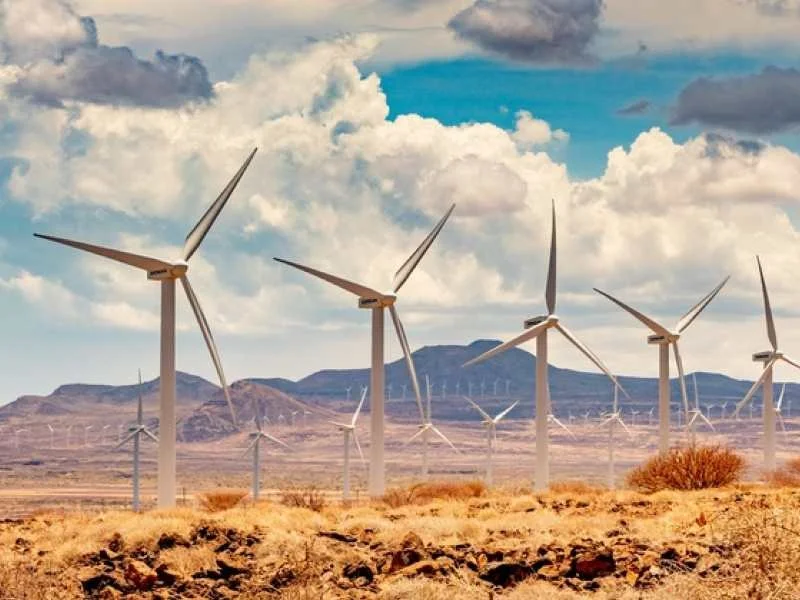
ImageSource: ESI Africa
Kenya’s ambition to expand its renewable energy capacity is central to achieving a just energy transition, meeting rising demand and supporting economic development. Between 2018 and 2025, electricity demand grew by 25% to 2,304 MW, while Kenya Power’s customer base rose to nearly 10 million. Yet, one in four Kenyans, mainly in rural areas, still lacks access.
Generation has stagnated since the Government of Kenya’s (GoK) 2021 moratorium on Power Purchase Agreements (PPAs), introduced amid public concern over high electricity costs. Parliament’s lifting of the moratorium in November 2025 signals renewed momentum, with targets to expand renewable energy capacity from 2,600 MW in 2024 to 5,920 MW by 2030. Achieving this requires substantial investment in both generation and transmission infrastructure.
This ambition collides with fiscal reality. Public debt exceeds US$92.4 billion, or 67% of gross domestic product (GDP), and the budgetary deficit is US$5.9 billion. Securing long-term, affordable private capital is therefore essential. Independent Power Producers (IPPs) already contribute over 30% of Kenya’s installed capacity, mobilising more than US$2.5 billion with Flagship projects such as Lake Turkana Wind Farm Project (LTWP) demonstrating investor appetite.
Across Africa, access to affordable long-tenor capital remains constrained. Financing costs are shaped by investor perceptions of political, regulatory, currency and offtake risks. The International Energy Agency (IEA) estimates the Weighted Average Cost of Capital (WACC) for projects in Kenya and Senegal at 8.5-9%. This is lower than the 9.5-11% for other African markets due to concessional financing, yet still significantly above the 4.7-6.4% seen in North America and Europe.
Kenya has repeatedly relied on sovereign guarantees and Letters of Support (LoS) to attract private investment. Whereas PPAs allocate commercial and operational risks between a utility and developer, LoS backstops political and offtaker risks. If loosely drafted, they create large contingent liabilities for the state.
Kenya’s renewable energy future will require significant private investment. In 2018, Kenya attracted approximately US$2.4 billion in climate-related investment, about one-third of the annual amount needed to meet its Nationally Determined Contribution (NDC) targets. Of this, 40.7% (US$979 million) came from the private sector. Notably, 65.6% of private finance came from foreign private companies, and almost all private investment (99.7%) was directed towards renewable energy generation.
Without market-based political cover, a single political event could trigger compensation claims equivalent to a substantial share of public debt and GDP. An open-ended sovereign guarantee would require the state to compensate for the total invested costs. In contrast, instruments such as Political Risk Insurance (PRIs), typically priced at about 2–3% of the insured amount annually, offer predictable costs that can be built into the financing structure and project costs over the PPA term.
The 2021 Report of the Presidential Taskforce on the Review of PPAs (“PPA Task Force Report”) recommended narrowing the scope of LoS risk coverage to minimise political risk exposure, local currency-denominated PPAs to reduce currency risk and a transition from take-or-pay to take-and-pay contracts, which are reforms essential to Kenya’s renewable energy future. Take-or-pay contracts, which require payments for contracted energy whether dispatched or not, have historically contributed to high retail tariffs. Take-and-pay contracts reduce fiscal exposure because payment is made for energy dispatched, though they must be balanced with investor requirements for revenue certainty.
Conclusion:
Kenya’s renewable energy future cannot rest on expanding government guarantees. Fiscal pressures make this model unsustainable. Market-based de-risking tools such as PRIs and Partial Credit Guarantees provide more transparent and better-aligned pathways for mobilising private capital.
Part Two will explore how the collapse of the Kinangop Wind Park illustrates the risks of poorly structured guarantees and what Kenya must do differently.
Subscribe to our newsletter below and stay informed on the latest updates, engagements, and news!
